
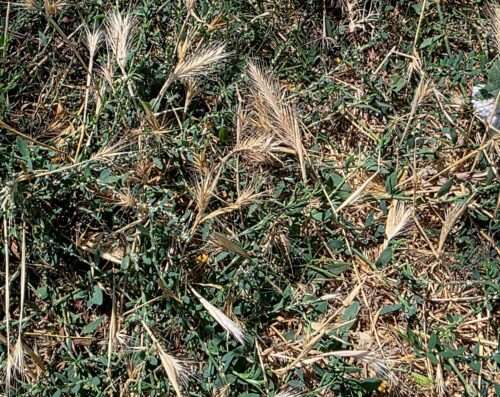
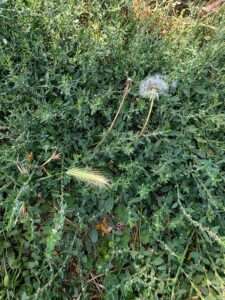
Foxtails have an innocent-sounding name, but for pet owners, these common weeds represent a serious danger. These grass-like seeds have sharp, barbed ends designed to burrow into the ground. Unfortunately, they are just as effective at burrowing into your dog’s body. The barbs prevent the foxtail from working its way out, so once embedded, it can only travel in one direction: deeper inside.
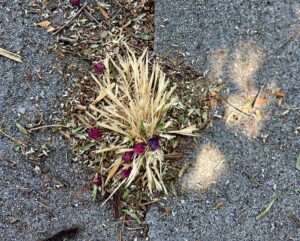
Foxtails can enter your dog’s body through the paws, nose, ears, eyes, and even the urinary tract, causing pain, infection, and, in some cases, permanent damage. If swallowed, they can cause abscesses or perforate the stomach or intestines. In rare, life-threatening cases, foxtails have been known to travel to a dog’s lungs or brain.
Here in Southern California, where many of our dogs make their homes, foxtails are especially prevalent this year due to unusually heavy spring rains. This has allowed the plants to thrive, and we’re seeing foxtails in seemingly every landscape, even in urban areas with concrete sidewalks.
When caught early, a foxtail can be removed by a vet. The vet will shave the area, extract the foxtail, flush the wound, and prescribe antibiotics.
A Hazard No One Could Predict
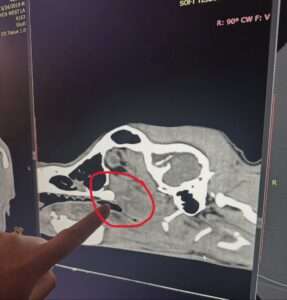
Search Dog Six is a highly trained, disaster-ready canine, but he recently encountered a hazard that no one could have foreseen, smaller than an inch and lurking in his own backyard.
One day, Six’s partner, Nick, noticed that Six was not his usual happy, energetic self. He was lethargic, and soon, his face began to swell. He began to have trouble eating. Nick took Six to the vet, and a CT scan revealed something veterinarians seldom see: a foxtail had become lodged deep in a muscle along Six’s skull.
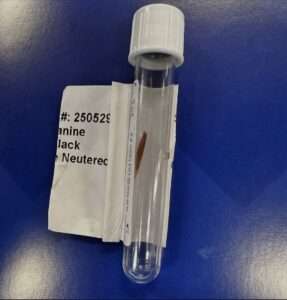
This was an extraordinarily unusual and dangerous situation. Luckily, we had a contingency plan. Thanks to our Canine Healthcare Fund, we had the resources necessary to treat Six, and a full surgical team was mobilized immediately. The team used advanced ultrasound guidance to pinpoint the exact location of the elusive foxtail. More than twelve dedicated doctors and nurses were on hand during the operation, working with precision and collaboration to save Six. The moment the foxtail was successfully removed, a wave of relief swept through the room, and everyone cheered.
Six received diligent post-operative care and made a full recovery. We are ecstatic that he not only survived this ordeal but has returned to full wellness and is back on active search duty.

Protecting Your Pet
Six’s story is a vivid reminder of the unpredictable challenges our pets face, whether they are a working dog or not. Protecting your dog comes down to two key things: awareness and prevention.
First, know what foxtails and grass seeds look like. Before venturing into somewhere new, look around to see if they are present.
After every walk or outdoor adventure, perform a thorough check of your dog’s coat, ears, eyes, and paws.
If you suspect a foxtail has burrowed into your dog, seek veterinary care immediately. Early intervention is the best way to prevent a minor issue from becoming a life-threatening emergency and ensure your beloved pup stays safe and healthy for years to come.